
Gold prices in India have fallen for the third consecutive day, shedding Rs 1,800 to Rs 1.5 lakh per 10 grams, primarily due to a strengthening rupee and weak global cues. Silver also saw a significant decline, tumbling Rs 5,000 to Rs 2.21 lakh per 10 grams.

Indian benchmark indices, Sensex and Nifty, experienced a decline in early trade due to relentless foreign institutional investor (FII) outflows, although a drop in crude oil prices below USD 100 per barrel provided some cushioning. Track Sensex, Nifty on October 1.

Indian benchmark indices Sensex and Nifty saw a significant rebound in early trade, with the Sensex surging over 700 points, driven by a decline in crude oil prices, easing concerns over Federal Reserve tightening, and the appointment of Anup Bagchi as the new MD and CEO of HDFC Bank.

President Droupadi Murmu hosted Swiss President Guy Parmelin at a banquet featuring exquisite delicacies from Jammu and Kashmir and Ladakh. The curated menu highlighted unique regional ingredients and culinary traditions, serving as a cultural exchange alongside significant bilateral discussions on trade, migration, nuclear energy, and defence.
Indian benchmark indices Sensex and Nifty experienced a significant downturn in early trade, with the Sensex tanking 730 points, driven by surging crude oil prices, escalating geopolitical uncertainties, and a weak trend observed across Asian markets.
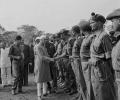
The conversations on July 22 and 23, 1962, meetings in Geneva between V K Krishna Menon, India's defence minister at the time, and Chinese vice premier Chen Yi are important because, had they been followed up, the subsequent border war may perhaps have been avoided, notes former foreign secretary Shyam Saran.

Akash Ambani is leading Jio Platforms' initial public offering (IPO), set to be India's largest, with a strategy that includes appealing to regional investors and drawing parallels to his grandfather Dhirubhai Ambani's historic public listing of Reliance Industries.

Global smart logistics provider DP World has confirmed its title sponsorship of the DP World India Championship will continue until 2035. This extension, part of a larger partnership, highlights India's growing importance in elite golf and as a strategic market for DP World, aiming to foster the next generation of Indian golfers.

Indian benchmark indices Sensex and Nifty rebounded in early trade after two days of losses, driven by easing crude oil prices and strong buying in blue-chip IT stocks, despite continued global uncertainties. Track Sensex, Nifty on September 30.

Indian equity benchmark indices Sensex and Nifty experienced a significant tumble in early trade, primarily driven by elevated crude oil prices due to ongoing West Asia uncertainty and substantial foreign fund outflows. Track Sensex, Nifty on September 29.

Indian stock markets witnessed a significant rebound, with the Sensex rallying 1,109 points and the Nifty closing above 22,720, driven by strong performances in IT and financial sectors, a recovering rupee, and Finance Minister Nirmala Sitharaman's comments on long-term capital gains (LTCG) tax.

Marchers would walk four or five abreast through one side of the main Mahatma Gandhi Road, holding red or white banners that stretched from one end to the other, shouting slogans, calling upon passers by, including employees watching from the offices that line the road, to join (Dekhta kya/Shaamil ho), recalls Jyoti Punwani.

Both journeys teach us the importance of active humility.

'We expect the Indian delegation to flag New Delhi's worries and elaborate on its standpoint on the Russia-linked tariff as well as the Section 301 investigation into overcapacity.'

The directive comes amid concerns over steep mark-ups on medicines and medical consumables sold at hospital pharmacies.

'Read the prospectus as a capital allocator deciding whether the business deserves your capital at the offered price.'

US Secretary of State Marco Rubio's visit to India this week underscores the complex dynamics of global energy policy, as Washington re-evaluates sanctions on Russian oil buyers amidst India's continued reliance on Russian crude.

India's trade deficit reached a six-month high of $31.98 billion in July, driven by a sharp increase in imports, particularly crude oil, electronic goods, coal, and fertilisers. Both merchandise exports and imports recorded their second-highest levels during the same period.

'The Indian market has struggled over the past two years.' 'It peaked in September 2024, and although it has moved up and down since then, investors have not really made money.'

French President Emmanuel Macron criticised unnamed foreign leaders, including Donald Trump and Benjamin Netanyahu, for making "stupid comments" and exploiting recent domestic unrest in France for their own political campaigns. Speaking in Doha, Macron condemned the use of misinformation and AI-generated content to misrepresent the situation, asserting there was no foreign interference in the events but manipulation of information afterwards. He specifically called out Trump's claims about France being "under siege" and Netanyahu's assertion of an "invasion of extremist Islam."

Punjab BJP chief Kewal Singh Dhillon met the family of slain anti-drug activist Parvinder Singh Jhota, demanding a CBI investigation into his murder. Dhillon appealed to Punjab residents to protest the AAP government by wearing black, alleging its failure to curb the drug menace and protect activists. Jhota was shot dead on October 13, and his family refuses cremation until justice is served.

Security personnel in Bahraich, Uttar Pradesh, seized 1,275 bottles of codeine-based cough syrup suspected of being smuggled into Nepal. A 23-year-old man was arrested after his car was intercepted during a joint operation by the SSB and UP Police. The consignment lacked proper documentation, and an investigation is underway to trace the supply chain and identify the smuggling network.

Mumbai Police conducted a two-day anti-narcotics operation, seizing drugs worth Rs 15.87 crore, arresting 21 absconding accused, and registering 72 cases. The drive, part of the 'Drug-Free Mumbai' and 'Nasha Mukt Bharat Abhiyan' campaigns, also saw the invocation of MCOCA against a drug syndicate and the demolition of illegal structures.

Palghar police have appealed to victims of a ponzi scheme run by Rich 2 Money Private Limited to register complaints. The Economic Offences Wing has identified 48 defrauded investors, losing Rs 5.91 crore, with the company promising high returns on investments in share markets and F&O trading.

Analysts predict that the Reserve Bank of India's interest rate decision, crude oil prices, and global bond yields will be the primary factors influencing the Indian stock market this week, alongside macroeconomic data and foreign investor activity.

A member must generally have completed 12 months of EPF membership to use the facility.

Mahindra introduces the XUV 3XO ZNG, a compact SUV with a factory-fitted twin-cylinder CNG setup that aims to overcome common compromises in performance, drivability, and boot space. This first drive review highlights its turbocharged engine, clever packaging, refined performance, and robust ride quality, positioning it as a strong contender in the CNG SUV market.

'India should not trade away its energy security for temporary tariff relief. Neither signing a trade agreement nor stopping Russian oil purchases can protect it from future US action.'

The Securities and Exchange Board of India (Sebi) has swiftly barred Copthall Mauritius Investment and Mansi Share & Stock Broking from the securities market for alleged manipulative trades during the closing auction session (CAS) on Sensex expiry. The regulator has also directed the impounding of wrongful gains totalling 3.67 crore from the two entities.

'This incident will send a wave of fear through the entire Bollywood community.'

Shaque: Trust No One has a promising mystery and enough juicy red herrings to keep you guessing, but its convenient writing and dated clichs eventually derail the show.

Former England all-rounder Samit Patel has called for patience and support for Indian teenage batting sensation Vaibhav Sooryavanshi, highlighting his immense talent and the need for Indian cricket to nurture him without undue pressure.

Amritsar police have successfully dismantled a cross-border arms and explosives smuggling module, arresting five individuals, including a father and son. Authorities recovered a .30 bore assault rifle, two hand grenades, and 13 foreign-made sophisticated pistols, along with 25 live cartridges. The module was reportedly in contact with a foreign-based smuggler, using drones for consignments.

The US announced a 60-day pause on sanctions against Russia and tariffs on other countries, including India, to analyse the global economic impact. This decision, made via an executive order by Trump, has drawn significant criticism from both Republicans and Democrats, who had previously passed the Lindsey O. Graham Sanctioning Russia and Iran Act. US officials stated the waiver allows for assessment of global energy pressures and European allies' refusal to impose secondary sanctions on Russian oil buyers.

Finance Minister Nirmala Sitharaman stated that the Reserve Bank of India (RBI) will persist in its efforts to prevent excessive volatility in the rupee, which has significantly depreciated against the US dollar due to global uncertainties, despite India's strong macro-economic fundamentals.

Manipur police have arrested 13 individuals, including a juvenile, for allegedly circulating and monetising non-consensual sexually explicit content, including child sexual abuse material, on Telegram. The arrests were made across Bishnupur, Imphal West, and Kakching districts as part of 'Operation Dignity', with 14 mobile phones seized and over 150 channels identified.

Six professors from Swami Ramanand Teerth Marathwada University (SRTMU) in Nanded have secured a patent for a 'Handheld Script Translation Device'. This innovation aims to overcome language barriers caused by different writing systems, allowing users to understand scripts they are unfamiliar with, even if they know the language. The device is expected to particularly benefit Marathi readers and researchers by making historical and cultural texts more accessible.

The Enforcement Directorate has made its sixth arrest, Mukesh Kumar Pukhraj Jain, in a pan-India cyber fraud and digital arrest case involving transactions worth Rs 30,000 crore. Jain is accused of acting as an RTGS agent for the criminal network. The probe, initiated by a Goa Police FIR, uncovered a vast money laundering operation across 20 states, with funds converted into foreign currency and linked to numerous shell companies.

Indian benchmark indices Sensex and Nifty saw gains in early trade, driven by a decline in crude oil prices due to easing geopolitical tensions in West Asia and strong buying interest in the IT sector.

British Prime Minister Andy Burnham's past meetings with Manchester City chairman Khaldoon Al Mubarak have come under scrutiny following criticism of Burnham's initial response to the club's financial rule breaches.
